


Local cafés, independent shops, family-run restaurants and repair services give neighbourhoods much of their character. Their survival rests on customers choosing them over larger chains.
That support can now begin online. A map search, direct order, thoughtful review or useful social post can help a small firm reach new customers and secure repeat sales.
The impact matters. At the start of 2025, the UK had 5.64 million small private-sector businesses. Together, they employed 13.1 million people and generated about £1.88 trillion in turnover.
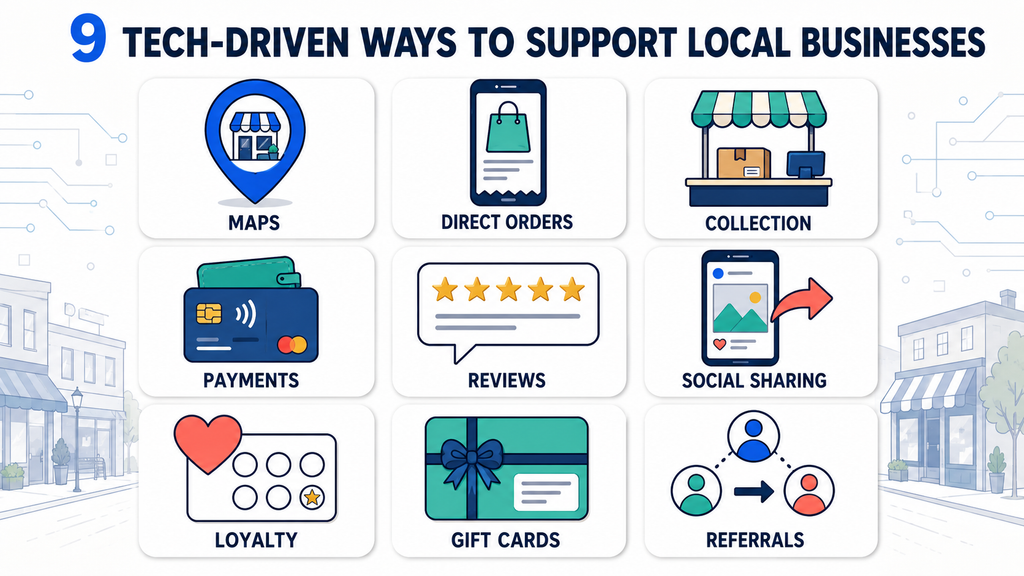
The nine strategies below show how digital tools can turn everyday searches, purchases and recommendations into practical support for local businesses across the UK.
1. Find Verified Businesses Through Maps and Directories
Use Google Maps, Apple Maps, council directories and recognised trade schemes. Search by service and location, such as “independent bookshop in Leeds”. Check the address, opening hours, recent photographs and official website before visiting.
Save trusted businesses into map lists for food, gifts, repairs and professional services. A planned route makes it easier to visit several independent shops during one journey. This Google Maps route planning guide explains how to add stops and select a travel mode.
For expensive services, confirm trade memberships on the organisation’s official website.
2. Buy Through the Official Website or App
Large marketplaces help shoppers discover products, yet an official store gives the business closer control over service and future communication. After finding an item on a marketplace, check whether the seller offers direct checkout. Compare the full price, postage, delivery date and returns terms.
Confirm the web address and business contact details before paying. The National Cyber Security Centre advises shoppers to check that a store is genuine, use secure payment methods and avoid bank transfers to unfamiliar online sellers. Guest checkout can reduce the personal data stored by a retailer.
3. Use Click-and-Collect or Local Delivery
Click-and-collect combines online convenience with a shop visit. It gives staff time to prepare the purchase and may remove postage costs. Collection can work well for books, clothing, food, gifts and repair services.
Check whether a restaurant, florist or farm shop runs its own delivery service before choosing an outside platform. An in-house option may provide better order updates or delivery windows. Friends and colleagues can combine purchases through a shared list, then choose one collection time. This can make a small order practical without several journeys.
4. Choose a Secure Payment Method
Use a secure card checkout, recognised digital wallet or verified payment link. Check the final amount before approval and keep the confirmation message.
In a physical shop, ask which accepted payment method the seller prefers. Fees and settlement times differ between payment providers. A polite question lets the owner choose without pressuring the customer. Never give up fraud protection merely to reduce a transaction fee.
Treat unexpected payment changes as suspicious. Contact the business through its official website if a message asks you to send money to a different account.
5. Write an Honest and Detailed Review
A strong review explains what you bought, what worked and who may find it useful. Mention the product or service and one concrete detail. Add a clear photograph if it helps another customer judge the item or location.
Keep every statement truthful. Fake reviews became an explicitly banned practice in the UK in April 2025. Government guidance covers fabricated reviews and concealed incentives. Balanced feedback often looks more credible than vague praise.
Contact the firm privately if a problem appears fixable. Update your review after a fair resolution so readers can see the complete experience.
6. Share Social Content That Helps Customers Decide
A useful recommendation needs more than a repost. Show the product, explain the occasion, tag the correct location and describe what made the experience valuable. Share current prices only.
Short videos suit cafés, makers, salons and homeware shops. Ask before filming staff, customers or private areas. Give the business permission to reshare your content if you accept that use.
Send recommendations to relevant audiences. A post about a Manchester repair shop belongs in a Manchester community group. Targeted sharing creates better prospects and avoids spam.
7. Join Email, SMS and Digital Loyalty Programmes
Email lists, text alerts and loyalty apps give small businesses a direct route back to customers. Subscribe if the updates are useful. Open relevant messages, save offers you plan to use and keep your preferences current.
UK electronic marketing rules protect recipients. The Information Commissioner’s Office states that marketing emails and texts to individuals usually need consent, apart from a limited existing-customer exception. Messages need an easy opt-out route.
Many firms use small business automation for welcome emails, appointment reminders and post-purchase messages. Correct information helps these systems send relevant communication.
8. Buy Digital Gift Cards, Subscriptions or Pre-Orders
A digital gift card gives the business revenue before redemption and lets the recipient choose an item. Buy through the official website. Check the expiry date, redemption rules and refund terms.
Subscriptions can create steadier demand for coffee, flowers, books, food boxes and recurring services. Set a calendar reminder before renewal so the decision remains intentional.
Pre-orders help makers estimate demand before producing stock. Check the expected delivery window and update policy. Crowdfunding carries different risks from a standard purchase, so read the campaign terms before contributing.
9. Create Digital Referrals That Produce Customers
Send the exact product or booking page when somebody asks for a recommendation. Add trusted firms to neighbourhood lists or share their event links with relevant contacts.
Use referral codes only for people with a genuine interest. Disclose any reward you receive. A brief account of your experience is more credible than copied sales text.
Build local spending into your routine through calendar reminders or shared lists. Plan an independent lunch each month or schedule seasonal services early. The business technology used by UK small firms makes repeat interactions easier to manage.
How to Help Without Spending Money
Correct an inaccurate map listing, write an honest review, recommend the firm to a suitable customer or share a local event. Offer private feedback if you notice a broken booking link, incorrect opening time or unreadable menu. State what happened and which device you used.
Consistent support matters more than one burst of online attention. Save useful businesses in Maps, join one relevant loyalty programme and review completed purchases. Verify unfamiliar sellers, pay securely and keep every recommendation honest. The best digital support connects a good local business with the customer who needs it.
