



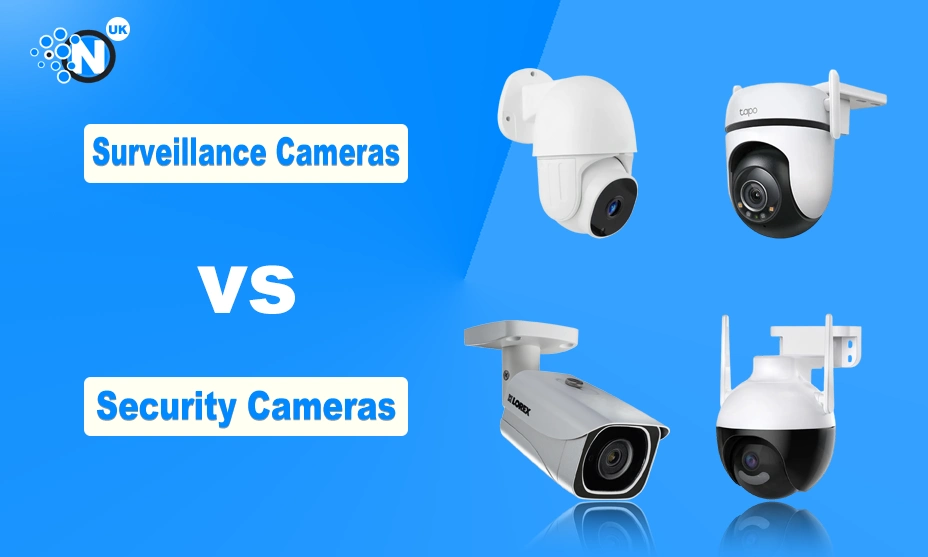
If you’ve ever searched for surveillance cameras vs security cameras, you’re not alone. Many people use these terms interchangeably, yet they are not exactly the same. While both aim to protect property, people, and assets, the way they work, where they are used, and what they are designed for can be very different.
In this guide, we’ll break down the real difference between surveillance cameras and security cameras in simple. You’ll learn how they work, where each one fits best, what they cost, and which option is right for your home or business. Whether you are a first-time buyer or upgrading an existing system, this article will help you make a confident decision.
Understanding the Basics
Before diving into technical features, it’s important to understand what each camera type is actually meant to do.
| Primary purpose | Continuous monitoring | Threat detection and prevention |
| Typical usage | Large areas, long-term observation | Homes and small businesses |
| Monitoring style | Passive recording | Active alerts and responses |
| Common users | Governments, corporations | Homeowners, shop owners |
Surveillance cameras focus on constant observation.
Security cameras focus on protection and response. This basic difference shapes everything else.
What Are Surveillance Cameras?
Surveillance cameras are designed for continuous, long-term monitoring. They are often part of a larger surveillance system used to observe activity over time rather than react instantly to threats.
| Aspect | Details |
|---|---|
| Recording type | 24/7 continuous recording |
| Storage | Large servers or NVR systems |
| Monitoring | Usually reviewed later |
| Typical locations | Airports, cities, factories |
These cameras are common in public spaces and large commercial environments. Their main role is evidence collection, not immediate intervention.

What Are Security Cameras?
Security cameras usually rely on motion detection. When movement is detected, the camera starts recording and sends an alert to the user through a mobile app or security system. Many models also allow live viewing, so you can check what is happening in real time.
Unlike traditional monitoring systems, security cameras are designed to be interactive, giving users control and instant updates.
| Feature | Explanation |
|---|---|
| Motion detection | Records only when movement is detected |
| Alerts | Sends instant notifications |
| Live view | Allows real-time monitoring |
| Storage | Saves clips locally or in the cloud |
Common uses of security cameras
Security cameras are mainly used for prevention and safety rather than passive monitoring. Their visible presence alone can discourage unwanted activity.
| Area | Purpose |
|---|---|
| Homes | Protect entrances and outdoor spaces |
| Shops | Prevent theft and monitor customers |
| Offices | Improve workplace safety |
| Outdoor areas | Deter trespassing |
Key benefits of security cameras
Security cameras offer several advantages that make them popular for everyday use.
- Provide real-time alerts when activity is detected
- Allow remote access through mobile apps
- Help deter theft and break-ins
- Offer recorded evidence if an incident occurs
Types of security cameras
There are different types of security cameras available, each designed for specific needs.
| Type | Best for |
|---|---|
| Indoor cameras | Living rooms, hallways |
| Outdoor cameras | Gardens, driveways |
| Wireless cameras | Easy installation |

Surveillance Cameras VS Security Cameras: Core Purpose
The biggest difference lies in why they exist.
| Question | Surveillance Cameras | Security Cameras |
|---|---|---|
| Are they proactive? | No | Yes |
| Do they send alerts? | Rarely | Yes |
| Used for prevention? | Indirectly | Directly |
Surveillance cameras watch.
Security cameras react.

Installation and System Complexity
Installation requirements differ greatly between the two.
| Factor | Surveillance Cameras | Security Cameras |
|---|---|---|
| Installation difficulty | High | Low to moderate |
| Wiring | Mostly wired Cameras | Wired or wireless |
| Setup time | Days or weeks | Hours |
| Professional help | Usually required | Optional |
If you want a plug-and-play solution, security cameras are far easier.
Storage and Data Handling
How footage is stored affects cost, privacy, and maintenance.
| Storage Type | Surveillance Cameras | Security Cameras |
|---|---|---|
| Local servers | Common | Optional |
| Cloud storage | Rare | Common |
| Storage size | Very large | Moderate |
| Review process | Manual | App-based |
Surveillance footage is often reviewed after incidents, while security footage is checked immediately.
Image Quality and Coverage
Both camera types offer high resolution, but their priorities differ.
| Feature | Surveillance Cameras | Security Cameras |
|---|---|---|
| Field of view | Very wide | Moderate |
| Zoom | Optical zoom | Digital zoom |
| Night vision | Advanced | Standard |
| Facial detail | Medium | High |
Security cameras focus more on identification, while surveillance cameras focus on coverage.
Smart Features and Technology
Modern security cameras are smarter by design.
| Feature | Surveillance Cameras | Security Cameras |
|---|---|---|
| Motion detection | Limited | Advanced |
| AI recognition | Rare | Common |
| Mobile app | No | Yes |
| Smart home integration | No | Yes |
This is where security cameras clearly stand out for everyday users.
Cost Comparison
Budget plays a major role in decision-making.
| Cost Factor | Surveillance Cameras | Security Cameras |
|---|---|---|
| Initial cost | High | Low to medium |
| Installation cost | High | Low |
| Monthly fees | None | Possible |
| Maintenance | Expensive | Minimal |
Security cameras are far more affordable for most people.
Best Use Cases
Each camera type shines in different environments.
| Environment | Best Choice |
|---|---|
| Home | Security cameras |
| Small shop | Security cameras |
| Warehouse | Surveillance cameras |
| City streets | Surveillance cameras |
| Office | Depends on size |
Choosing the wrong type often leads to wasted money and poor results.
Privacy and Legal Considerations (UK Focus)
Privacy laws matter, especially in the UK.
| Aspect | Surveillance Cameras | Security Cameras |
|---|---|---|
| GDPR concerns | High | Moderate |
| Public recording | Common | Limited |
| User responsibility | Organisation | Individual |
Security cameras are generally easier to manage legally for personal use.
Pros and Cons Summary
| Camera Type | Pros | Cons |
|---|---|---|
| Surveillance cameras | Wide coverage, long-term data | Expensive, complex |
| Security cameras | Easy setup, real-time alerts | Limited coverage |
FAQs
No. Surveillance cameras focus on monitoring, while security cameras focus on protection and alerts.
Security cameras are better for homes due to ease of use and smart features.
Yes, most surveillance cameras record continuously.
Many security cameras use internet for alerts and cloud storage, but some work offline.
Yes, if used responsibly and in line with privacy laws.
Yes. Large properties often combine both systems for full coverage.
Bottom Line
When comparing surveillance cameras vs security cameras, the real difference comes down to purpose. Surveillance cameras are designed for long-term observation across large areas, while security cameras are built for immediate action and personal protection.
If you want real-time alerts, easy setup, and everyday safety, security cameras are the smarter choice. If you need wide-area monitoring and historical evidence, surveillance cameras make more sense.


