



After comparing the leading platforms available in the UK, I noticed the same problem over and over again. Most reviews focus on features and ratings instead of helping you understand which platform actually fits your business.
That’s why many businesses either pay for tools they’ll never use or outgrow their platform far sooner than expected.
I compared the platforms that UK businesses use most and focused on what really matters: pricing, ease of use, customization, scalability, and selling features.
So now you’ll find a straightforward comparison of Shopify UK, ShopWired, Create.net, WooCommerce, SHOPLINE, and Squarespace. By the end, you’ll know which platform suits your business, and which ones you can confidently rule out.
Top 6 E-commerce Platforms to Create an Online Store in the UK
Below, I have mentioned a list of the top 6 E-commerce platforms that will help you create an online store in the UK. Here are the top 6 secure, user-friendly UK e-commerce platforms to help you create a website with an online store:
- Shopify uk
- ShopWired
- Create.net
- WooCommerce
- SHOPLINE
- Squarespace
1. Shopify UK
Shopify is a leading e-commerce platform that helps UK businesses create and manage online stores without requiring advanced technical skills.
It provides tools for product management, payments, marketing, and store customization in one platform.
Best for: Businesses that want an all-in-one online store platform with room to grow.
Key features:
- Built-in payment and checkout tools
- Large app marketplace for extensions
- Multi-channel selling support
- UK tax and shipping integrations
- Professional storefront themes

| Pros | Cons |
| Easy setup for beginners | Monthly costs can increase with apps |
| Strong scalability for growing brands | Advanced features often require paid add-ons |
| Reliable hosting and security included | |
| Supports multiple sales channels |
2. ShopWired
ShopWired is a UK-based e-commerce platform designed for businesses that need built-in selling tools, flexible customization, and support for growing online stores.
It provides features for product management, marketing, and integrations while helping merchants build professional e-commerce stores.
Best for: UK retailers looking for a dedicated British e-commerce platform.
Key features:
- UK-based customer support
- Advanced product management options
- Marketplace integrations
- Built-in SEO tools
- B2B and wholesale selling features

| Pros | Cons |
| Designed specifically for UK businesses | Smaller ecosystem compared with Shopify |
| Strong e-commerce features included | Learning curve for advanced tools |
| Good support for growing retailers | |
| Suitable for professional online stores |
3. Create.net
Create.net is a UK e-commerce platform for small and growing businesses to build and manage online stores. It includes a website builder, SEO tools, payment integrations, inventory management, and mobile-responsive templates.
Offering an all-in-one solution for launching and running an online retail e-commerce platform, it’s a website builder with e-commerce tools that lets small businesses create and manage online stores without technical expertise.
Best for: Small businesses that need a simple website for online store creation.
Key features:
- Drag-and-drop website builder
- Domain and hosting services
- Basic e-commerce management
- Mobile-friendly templates
- Integrated business tools

| Pros | Cons |
| Simple setup process | Limited advanced e-commerce features |
| Suitable for beginners and small sellers | Less flexible than dedicated e-commerce platforms |
| UK-focused service | |
| Includes website-building tools |
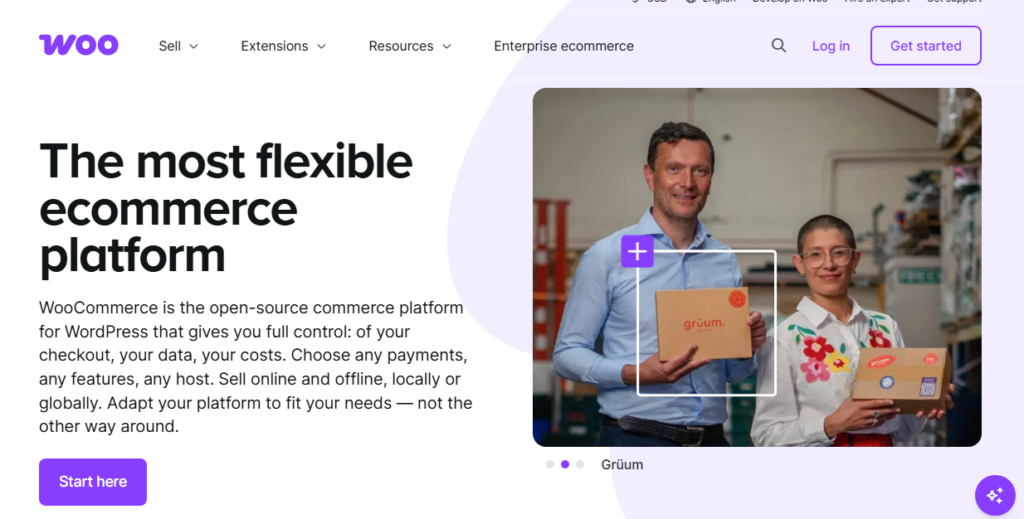
4. WooCommerce
WooCommerce is an open-source e-commerce platform for WordPress that lets businesses run online stores.
It supports customization, multiple payment gateways and shipping options, and integrates with many WordPress themes and plugins.
It also offers extensive control over store design, features, and functionality through a wide range of extensions. It is widely used by UK businesses that want flexibility and customisation.
Best for: Businesses that need complete control over their e-commerce website.
Key features:
- Extensive plugin ecosystem
- Full website customisation
- Flexible product management
- Strong SEO compatibility
- Support for digital and physical products
| Pros | Cons |
| Highly customisable | Requires WordPress management knowledge |
| No platform subscription fee | Hosting and maintenance costs vary |
| Large developer community | |
| Strong SEO advantages |
5. SHOPLINE
SHOPLINE is an e-commerce platform for building and managing online stores across multiple sales channels, offering website building, payment integration, inventory management, and omnichannel selling tools.
It provides tools for store management, marketing campaigns, customer engagement, and cross-border commerce.
Best for: Brands looking for an e-commerce solution with international expansion options.
Key features:
- Omnichannel selling tools
- Marketing automation features
- Social commerce support
- Inventory management options
- International selling capabilities

| Pros | Cons |
| Supports growing e-commerce businesses | Less familiar among UK-only sellers |
| Strong marketing features | Some features depend on paid plans |
| Suitable for cross-border selling | |
| Multiple sales channel support |
6. Squarespace
Squarespace is a website-building platform with integrated e-commerce tools that helps businesses create visually appealing online stores.
It offers customizable templates, product management, and selling features for brands looking to establish a British online shopping platform.
It is commonly used by creative brands, freelancers, and small businesses that want a polished website with simple selling features.
Best for: Creative businesses that prioritise design and brand presentation.
Key features:
- High-quality website templates
- Built-in content management tools
- Mobile-optimised designs
- Marketing and analytics features
- Simple product listings
| Pros | Cons |
| Excellent design quality | Limited advanced e-commerce tools |
| Easy website management | Better suited for smaller inventories |
| Good for branding-focused stores | |
| Beginner-friendly interface |
People Also Ask About E-commerce Platforms
1. What is the best e-commerce platform in the UK?
The best platform depends on your business needs. Shopify is ideal for easy setup and scalability, WooCommerce offers advanced customisation, while ShopWired focuses on UK retailers.
2. Which e-commerce platform is best for small businesses in the UK?
Small businesses often choose platforms like Create.net and Squarespace because they offer simple setup, templates, and easy store management.
3. Is Shopify better than WooCommerce for an online store?
Shopify is easier to manage with built-in hosting and security, while WooCommerce provides more flexibility and control through WordPress. The better choice depends on your technical needs and growth plans.
4. What features should I consider when choosing an e-commerce platform?
Look for features such as payment support, SEO tools, integrations, inventory management, customisation options, pricing, and scalability to match your business goals.
5. What e-commerce platform does Nike use?
Nike primarily uses Salesforce Commerce Cloud for its global e-commerce operations, complemented by its own custom technology and digital infrastructure to deliver a tailored shopping experience.
6. Which e-commerce platform is best for growing businesses?
Growing businesses can consider Shopify, ShopWired, SHOPLINE, or WooCommerce based on their needs for scalability, customisation, and sales expansion.
My Final Words on Platforms For Online Stores
No single e-commerce platform is the best for every UK business—and that’s exactly the point.
After comparing these platforms, one thing became clear: the right choice depends on your business size, budget, technical skills, and growth plans, not on which platform is the most popular.
If you’re launching a small store, Create.net or Squarespace offers a simple start. For long-term growth, Shopify and ShopWired provide stronger scalability. If you need complete flexibility, WooCommerce is a solid choice, while SHOPLINE is ideal for multi-channel and international selling.
Choose a platform you can grow with, not one you’ll outgrow. Taking the time to make the right decision today is far easier than migrating your entire store later.
