


KEY TAKEAWAYS
- Thirteen per cent of Brits have been shown a fake customer service number via a search engine or AI tool, rising to 27 per cent among 25–34 year olds.
- One in ten consumers always trust a phone number generated by an AI tool, while 15 per cent never take steps to verify it is legitimate.
- Call Defence, Virgin Media O2’s AI scam detection system, has flagged over one billion suspicious calls and blocked over one billion scam texts to date.
- Customers are urged to report suspicious numbers to 7726, free on any UK network.
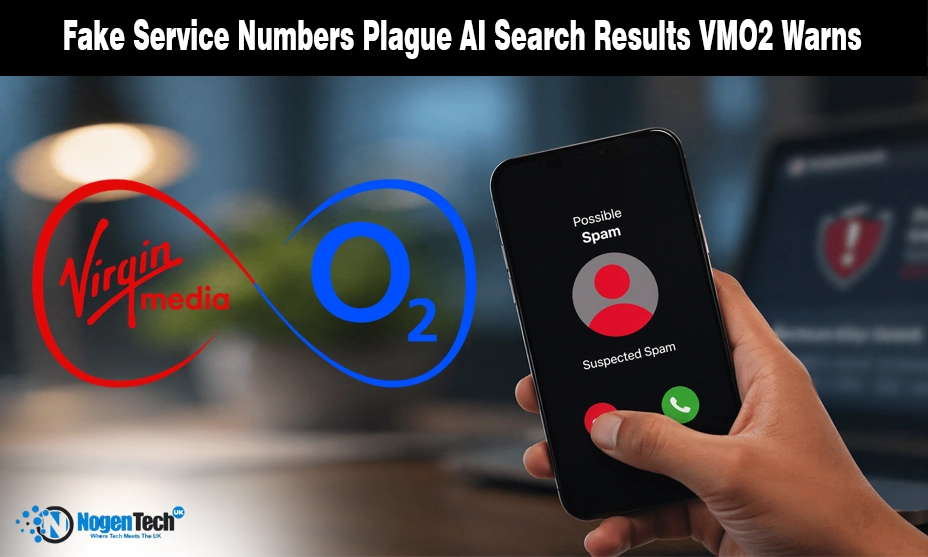
Virgin Media has issued a fraud warning after research found criminals are manipulating AI search results and chatbots to surface fake customer service numbers to millions across the UK. The company said fraudsters are now able to influence AI tools so fake contact numbers appear in search results.
This means people looking up customer service numbers through search engines or AI assistants could be unknowingly directed to criminals instead of real support lines.
The company confirmed it has already handled verified fraud cases in which customers called these numbers and were subsequently scammed, and describes the tactic as a growing threat as more people rely on quick, AI-generated answers. This surge in exploitation comes as the UK launches its Sovereign AI Unit to secure national digital infrastructure.
How Criminals Are Manipulating AI Search Results
The mechanism behind the fraud, as Telecoms confirmed, involves tricking AI-powered search results and online directories so that fake contact numbers get indexed and shown instead of real ones.
This is not an entirely new scam; criminals have long gamed traditional search rankings, but AI-generated results have dramatically lowered the barrier.
When someone asks an AI tool for a company’s phone number, it may return a convincing answer that has been fed into its sources by fraudsters.
As the Mirror confirmed, the most frequently impersonated organisations include Amazon, HMRC, high street banks, and payment services like Visa.
Criminals target these firms because people often contact them in a hurry and are less likely to double-check the details before calling.
The Research Figures Behind the Warning
Virgin Media O2’s research quantifies a threat that has previously been difficult to measure.
As Telecoms reported, 13 per cent of UK adults said they had come across a fake customer service number via a search engine or AI tool, rising to 27 per cent among those aged 25 to 34. A further 22 per cent were unsure if an online number was real.
The trust gap adds to the danger. As the company’s announcement confirmed, one in ten people always trust an AI-generated phone number, while 15 per cent never verify legitimacy before dialling.
Murray Mackenzie, Director of Fraud Prevention at Virgin Media O2, said AI tools are giving fraudsters new ways to push realistic-looking fake numbers into search results and chatbots.
The warning follows wider UK AI security concerns, including banks flagging Anthropic’s Mythos, showing AI is outpacing public awareness.
How Call Defence Works to Protect Customers
Virgin’s main technical defence is its Call Defence service, developed with fraud prevention firm Hiya. As the Mirror confirmed, it uses AI to analyse phone number behaviour in real time, and flags suspected scam or spam calls on a user’s screen before they answer.
Since launching in November 2024, around 70 million calls a month are now being labelled.
Calls flagged as scams are answered 42 per cent less often and last 89 per cent less time than normal calls. The system has also flagged over one billion suspicious calls and blocked more than one billion scam texts to date.
This reflects a key tech trend in the UK, where the same AI technology that enables fraud is increasingly being used to detect and stop it in real time.
What Customers Should Do Right Now
Virgin’s advice is simple: always use customer service numbers from official websites, apps, or printed bills, not from search engines or AI tools. For O2 users, the verified number is 202 from an O2 device, while Virgin Media customers should dial 150 from a landline.
Any suspicious number found online should be reported to 7726, free on all UK networks, which helps flag and shut down scam lines faster.
As Telecoms noted, fraud cases across UK telecom networks are rising, with Virgin Media O2 warning people to treat AI-generated contact details as unverified unless confirmed from an official source.
